
Right Audience. Right Offer. Right Moment.
I create and optimize paid advertising campaigns designed around your audience, business goals, budget, and customer journey.
Paying for Clicks Is Easy. Making Them Count Is the Work.
Launching an ad takes minutes.
Getting the right people to click, engage, and convert is a different story.
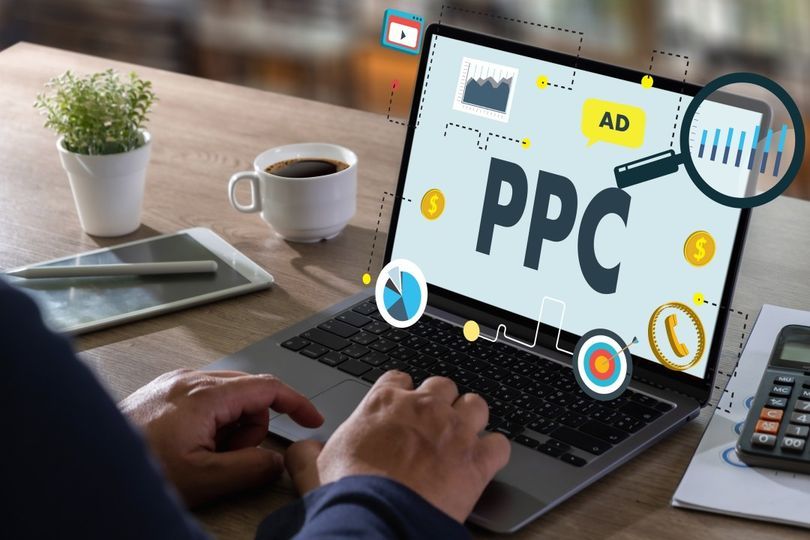
PPC advertising gives your business the opportunity to appear in front of highly relevant audiences through platforms such as Google Ads and Meta Ads.
But successful paid advertising isn’t simply:
Create → Launch → Spend
It requires research, targeting, compelling creative, relevant landing pages, tracking, testing, and continuous optimization.
I approach PPC by looking at the whole journey—from the moment someone sees your ad to what happens after they click.
Because a cheap click isn’t always a valuable click.
The goal is to turn your advertising budget into meaningful business results.
What Does PPC Advertising Include?
From Campaign Setup to Continuous Optimization.
01
Campaign Strategy
Define the campaign objective, audience, offer, budget, platform, and overall advertising approach.
02
Audience Research
Identify the people most likely to need your product or service and understand their interests, intent, and behavior.
03
Google Ads
Create search campaigns that help your business appear when potential customers are actively searching for relevant products or services.
04
Meta Ads
Run targeted campaigns across Facebook and Instagram for awareness, engagement, traffic, leads, or sales.
05
Ad Copy & Creative
Develop ad messaging and creative concepts designed to capture attention and communicate your offer clearly.
06
Landing Page & CRO
Review the journey beyond the ad and improve landing pages and conversion elements so clicks have a better chance of becoming actions.
07
Tracking & Analytics
Set up and monitor relevant tracking to understand clicks, leads, conversions, cost, and campaign performance.
08
Testing & Optimization
Test audiences, creative, messaging, placements, and other campaign elements to identify what performs best.
09
Performance Analysis
Go beyond vanity metrics and evaluate what your campaigns are actually contributing to your business.
Questions Worth Asking. Answers Worth Knowing.
PPC, or pay-per-click advertising, is a form of paid advertising where businesses generally pay when someone interacts with their ad, such as clicking it. Google Ads and Meta Ads are common PPC platforms.
SEO focuses on improving your organic visibility in search results, while PPC uses paid advertising to gain visibility. They can work together to create a broader search and digital marketing strategy.
It depends on your business and objective. Google Ads can be particularly useful for capturing existing search intent, while Meta Ads can be useful for reaching and targeting audiences based on interests, behaviors, and other signals.
There isn't one universal budget. It depends on your industry, competition, audience, offer, objectives, and expected customer value. The focus should be on finding a budget that allows enough data to make informed decisions.
PPC can start generating traffic shortly after campaigns go live, but meaningful performance optimization takes time. Campaigns need enough data to identify what is working and where improvements are needed.
No responsible marketer should guarantee a specific number of leads or sales. Results depend on factors including your offer, market, competition, audience, landing page, budget, and campaign execution.
Clicks don't automatically mean conversions. We would examine factors such as audience targeting, ad messaging, search intent, offer, landing page experience, tracking, and the conversion process to identify where people are dropping off.
Depending on the campaign goal, metrics can include impressions, clicks, CTR, CPC, leads, conversions, CPA, conversion rate, and revenue or ROAS where reliable revenue tracking is available.
A Click Is Only the Beginning.
Imagine someone sees your ad.
PPC works best when the entire journey works together.
That’s why I don’t look at PPC as simply buying clicks.
I look at what happens before, during, and after the click.
The Usual Approach vs. My Approach
Typical PPC Approach
- Launches campaigns without enough research
- Focuses mainly on getting clicks
- Uses broad targeting without a clear strategy
- Creates one version of an ad and leaves it running
- Sends every audience to the same page
- Measures clicks without looking at conversions
- Makes decisions based on short-term performance
- Increases budget without understanding what’s working
My Approach
- Researches the audience, market & competition first
- Focuses on valuable actions, not just clicks
- Builds targeting around intent, audience & campaign goals
- Tests creative, messaging & targeting
- Connects ads with relevant landing pages
- Tracks what happens after the click
- Uses data to make informed decisions
- Scales what works when the data supports it
Because more clicks don’t always mean more business.
The right clicks do.
Let’s build something meaningful together?
Vyhini.com
Digital Marketing | SEO | Social Media | Content | PPC | Branding | AEO & GEO
Services