
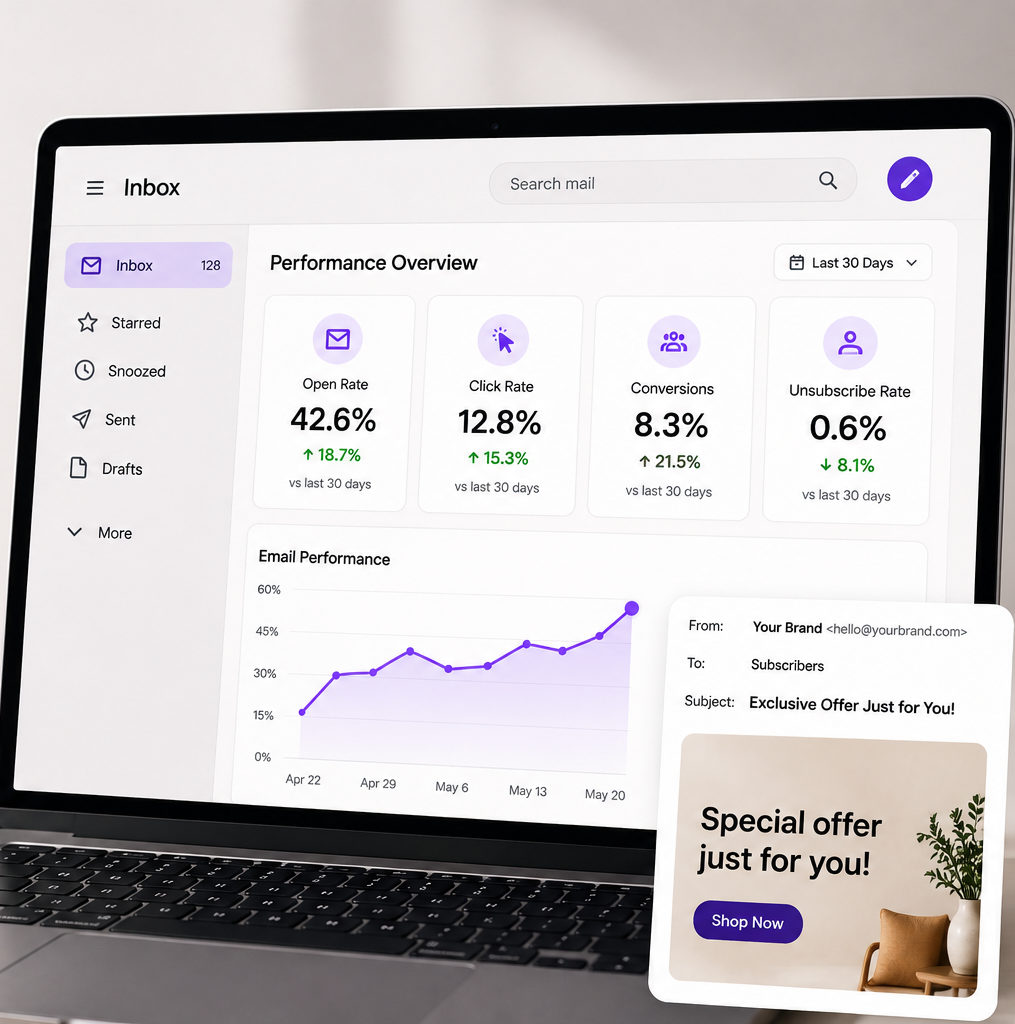
Your Customers Are Checking Their Inbox. Is Your Brand There?
Email Strategy · Campaigns · Automation · Content · Analytics
Someone visits your website.
Someone follows your Instagram.
Someone downloads your guide.
Someone enquires about your service.
But what happens after that interaction?
Without consistent communication, potential customers can forget about your brand.
Email marketing gives you a way to stay connected beyond the first interaction.
It allows your business to share useful information, introduce offers, nurture relationships, and bring customers back when they’re ready to take action.
One Click Can Get Their Attention. The Right Email Can Bring Them Back.
Because Email Isn’t Just About Sending Messages.
It’s about staying relevant in the most important moments.
What Email Marketing Includes
Email marketing isn’t just writing an email and pressing send.
It combines strategy, content, audience segmentation, automation, and performance tracking to create communication that moves people toward action.
Email Strategy
Know what you're sending and why: Understand your business goals, audience, offers, and customer journey before planning campaigns.
Audience Segmentation
Different customers need different messages: Divide your audience based on interests, behaviour, engagement, purchase history, or other relevant factors.
Email Content
Give people a reason to open: Create clear, engaging email copy that informs, connects, promotes, or encourages action.
Campaign Planning
Send the right message at the right time: Plan newsletters, promotional campaigns, product launches, seasonal emails, and other communications.
Email Automation
Not every email needs to be sent manually: Set up automated communication such as welcome emails, follow-ups, reminders, and customer journeys.
Personalization
Make the message feel relevant: Use customer information and behaviour to create more personalized communication.
Performance Tracking
Don't just send. Measure: Track metrics such as open rate, click-through rate, conversions, unsubscribes, and engagement.
Optimization
Find what works better: Use campaign data to improve subject lines, content, timing, calls-to-action, and overall email performance.
Why Does Your Business Need Email Marketing?
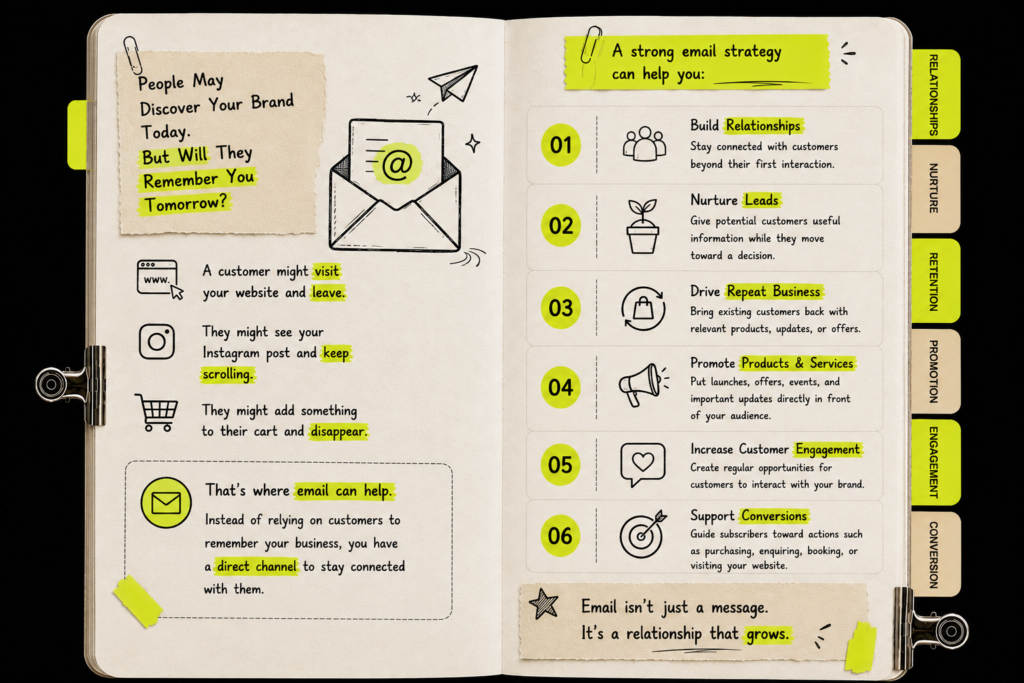
They Need a Reason to Open Yours.
Every day, inboxes are filled with promotions, newsletters, notifications, and offers.
So why should someone open your email?
Because it gives them something they actually care about.
Maybe it’s useful information.
Maybe it’s a solution to a problem.
Maybe it’s an offer they don’t want to miss.
Maybe it’s simply a message that feels relevant to them.
Your Customers Don't Need Another Email.
Email marketing isn’t about filling inboxes.
It’s about earning attention, building relationships, and creating reasons to come back.
One Email Can Get Attention.
A Good Email Journey Builds a Relationship.
Your customer doesn’t always buy the first time they hear about you.
Sometimes they need:
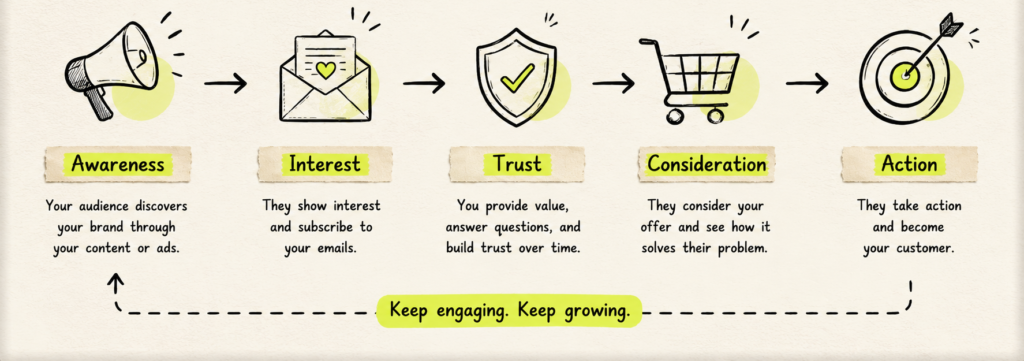
Email can support each stage.
The goal isn’t to send more emails.
It’s to send emails that have a purpose.
Your Customers Have Questions. Your Emails Can Start Answering Them.
Email marketing is the process of using email to communicate with customers and prospects, build relationships, promote products or services, and encourage specific actions.
Emails can include newsletters, promotional campaigns, welcome emails, product updates, event invitations, follow-ups, and automated customer journeys.
No. You can start with a smaller audience and build your subscriber list over time through your website, social media, offers, and other channels.
Yes. Email automation can be used for journeys such as welcome sequences, follow-ups, reminders, lead nurturing, and post-purchase communication.
There isn't one frequency that works for every business. It depends on your audience, content, industry, and marketing goals. The focus should be on consistency and relevance.
Performance can be evaluated using metrics such as open rate, click-through rate, conversions, unsubscribe rate, and overall engagement.
Yes. Strategic campaigns, personalized messaging, product promotions, and automated journeys can help guide subscribers toward purchases and other conversions.
By focusing on relevant content, clear communication, appropriate sending frequency, permission-based lists, useful subject lines, and giving subscribers control over their preferences.